
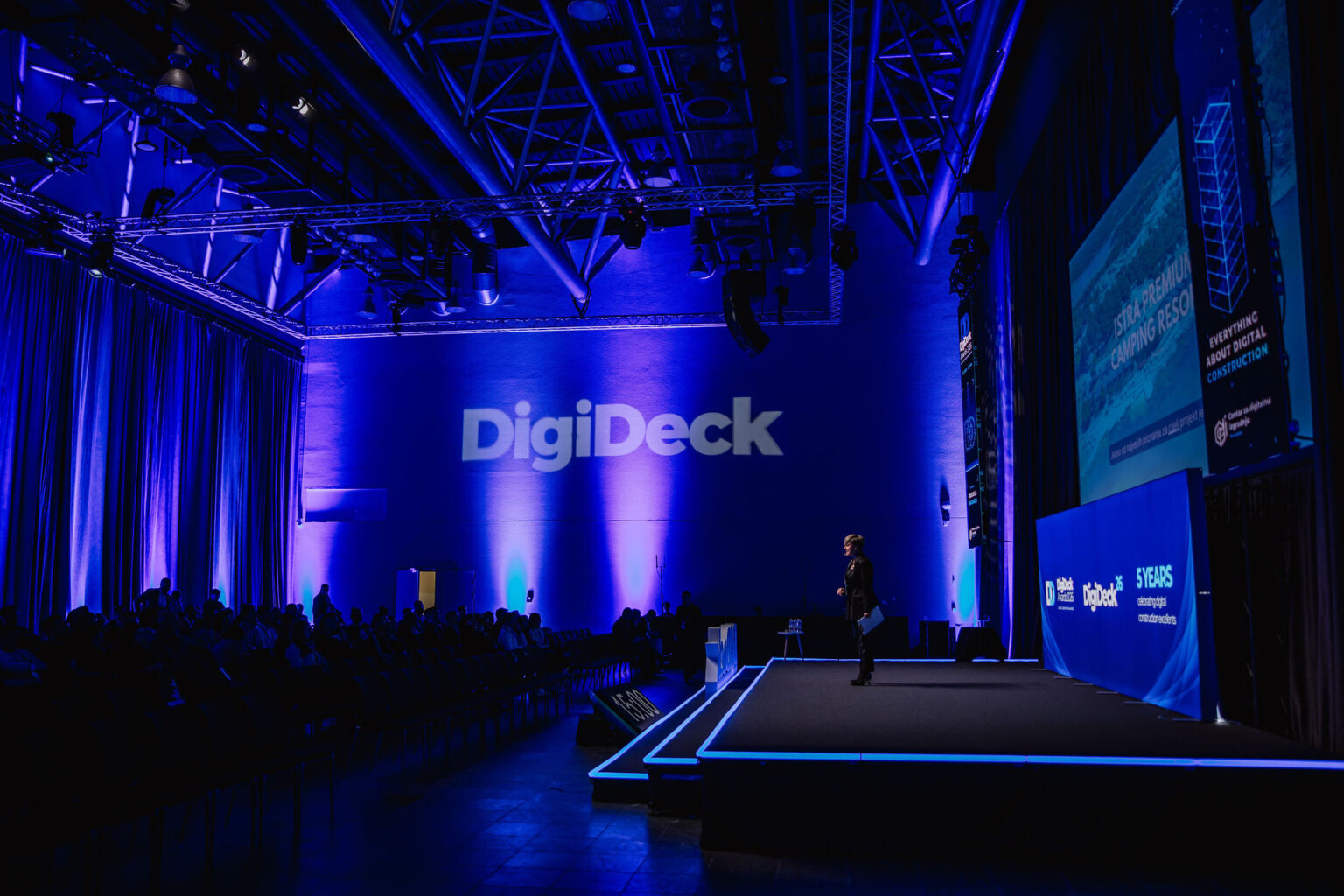
On Thursday, 5 November 2026, Mozaik Event Center in Zagreb hosted DigiDeck26, an international conference on digital technologies in construction organised by the Centre for Digital Built Croatia (CDIH). This year’s edition marked five years of the Centre’s work and five years of the conference. Over that time, DigiDeck has become a key meeting point for Croatia’s construction community and for professionals who see digital transformation as essential to their work. Across two stages running in parallel, 33 speakers and panellists delivered 24 sessions to full rooms throughout the day.
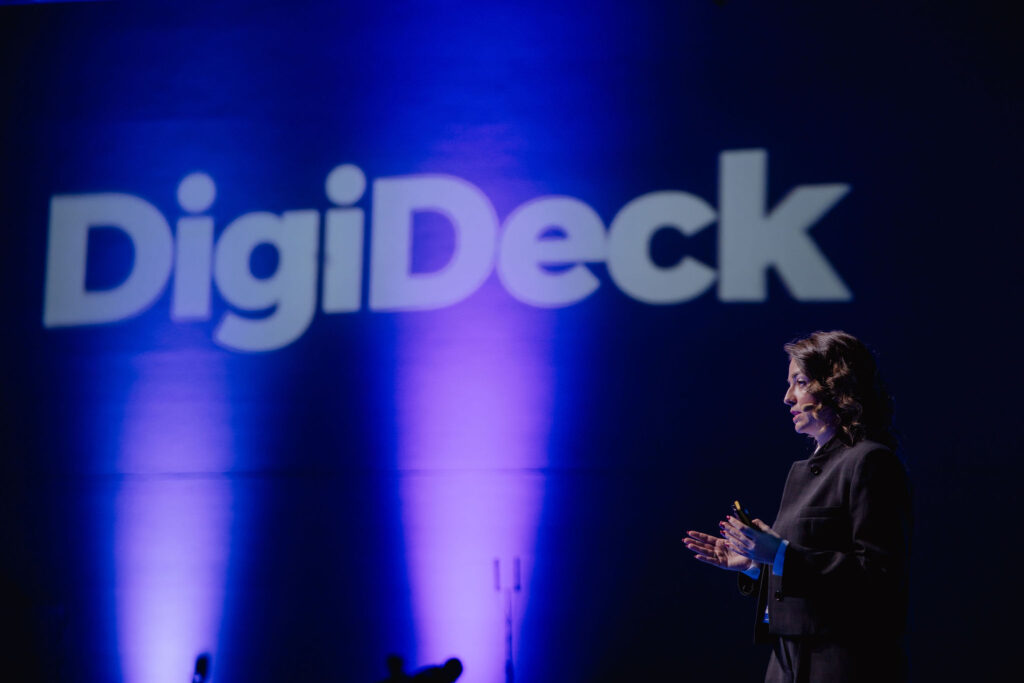
CDIH President Monika Mlakić Lovrinović opened the conference with a look back at the Centre’s first five years. She then turned to the future, outlining five major changes the construction sector can expect by 2031. Her opening remarks set the agenda for the day by putting the industry’s readiness for changes already under way at the centre of the discussion.
Keynote speaker Ivan Bešlić, co-founder and CSO of Sofascore and president of UNIT Croatia, picked up on this theme in his talk, “The End of the Golden Age: Why Construction Is Set to Follow IT’s Path”. Drawing on his experience of building one of Croatia’s most successful technology companies, Bešlić offered a measured comparison of IT and construction, two industries that may seem to have little in common. He warned that the changes AI is bringing to IT would eventually reach construction with comparable force. His message was clear: the time to adapt is now, and those who start working with AI early will be better placed to respond as the industry changes.

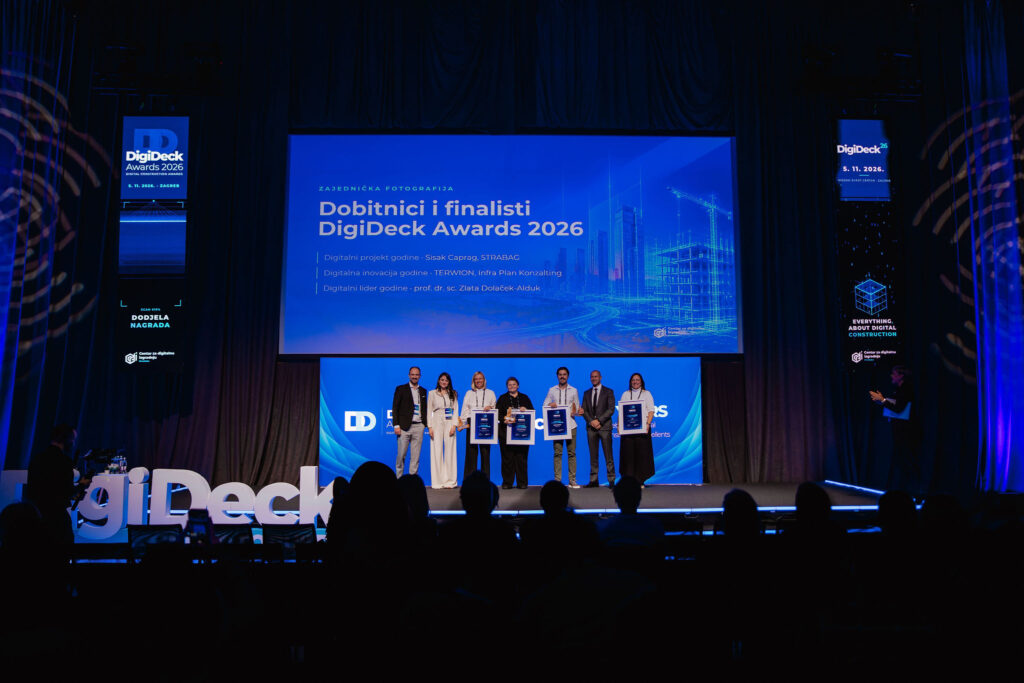
A highlight of the morning programme was the presentation of the 2026 DigiDeck Awards, which recognise digital excellence in Croatian construction. Digital Project of the Year went to STRABAG’s Sisak Caprag project. Digital Innovation of the Year went to TERWION, Infra Plan Konzalting’s integrated BIM and GIS platform for smart, sustainable management of buildings and resources. Zlata Dolaček-Alduk from the Faculty of Civil Engineering and Architecture Osijek received the Digital Leader of the Year award. The finalists reflected the strength of this year’s entries: Studio Nexar’s FUGA, which automates the preparation of design documentation in line with electronic permitting requirements; BIM Nest’s tool for automatic sheet numbering in accordance with ISO 19650; and RegulA, developed jointly by Forvis Mazars Digital and Studio Nexar.
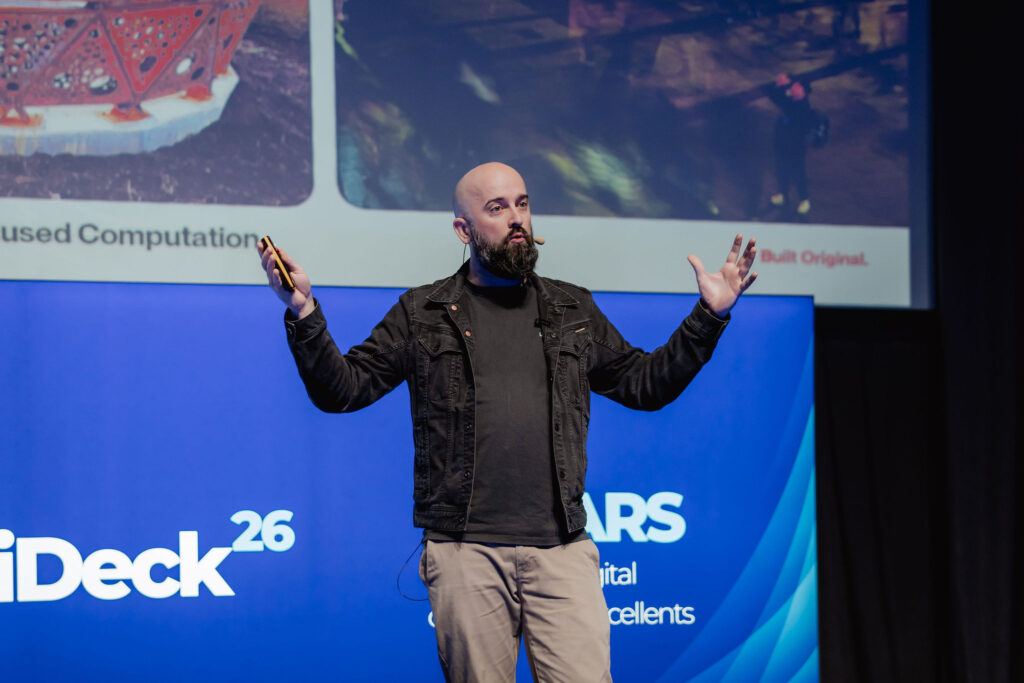
Nick Tyrer, Associate Director at BDP Pattern, one of the world’s leading sports architecture practices, brought an international perspective to the conference. In “Creative Computation and the Future of Stadium Design”, he introduced the audience to projects of exceptional scale, where computational design and off-site methods underpin the entire process. His examples showed how stadiums are designed as complex systems, with much of the work prepared off site. They offered a glimpse of where major infrastructure design is heading and the precision needed to deliver projects on that scale.
One of the most anticipated sessions was the panel “BIM in Croatia: Do We Have Standards or Just Standard Excuses?” It brought together Margareta Premužić from the Ministry of Physical Planning, Construction and State Assets; Marko Šimac from Hrvatske ceste; Associate Professor Maja-Marija Nahod, PhD, from the University of Zagreb’s Faculty of Civil Engineering; Marko Dabrović from 3LHD; and Boško Mišlov from STRABAG. The discussion opened a constructive dialogue between the Ministry and industry professionals, creating an opportunity for future collaboration with professional associations on the systematic adoption of BIM in Croatia. This may prove to be one of the most significant outcomes of this year’s conference.
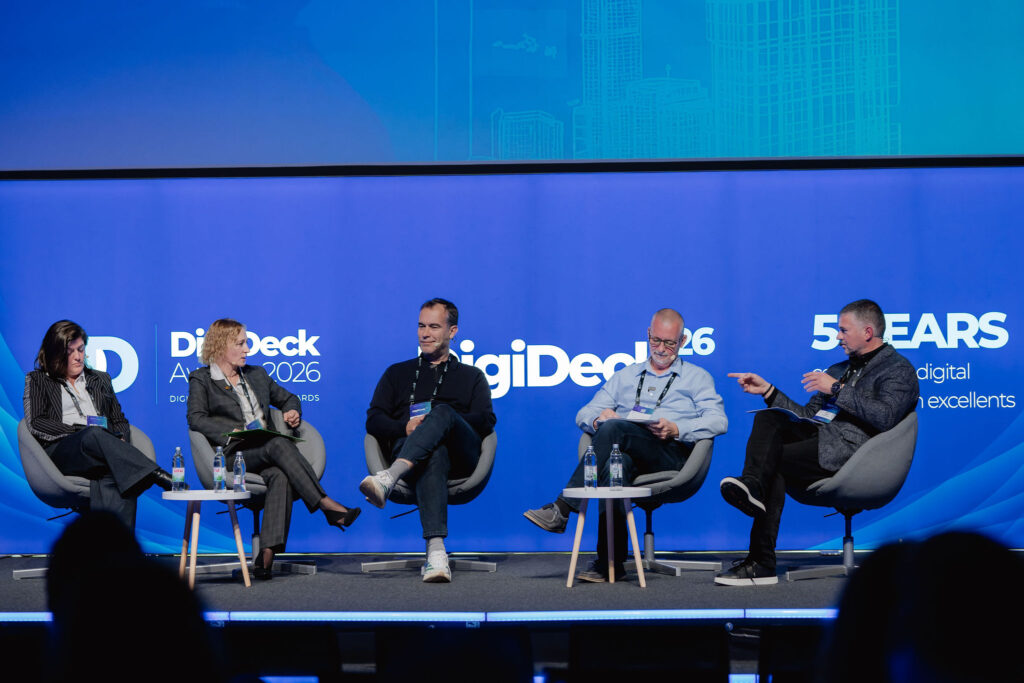
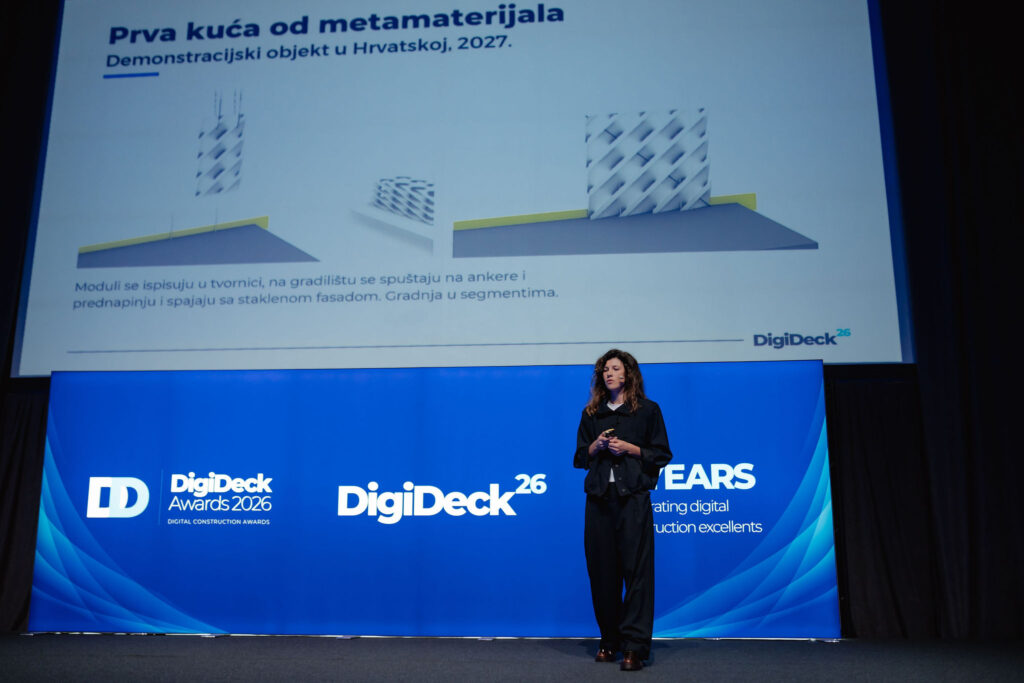
The programme also highlighted solutions being developed in Croatia. Lucija Stepinac, PhD, CEO of Metastruct and a lecturer at the University of Zagreb’s Faculty of Architecture, traced the development of generative design and 3D printing from academic research to the launch of a startup. Using Zagreb Airport as an example, Irina Stipanović and Vedran Orešić showed how BIM models continue to support facilities management after construction is complete.
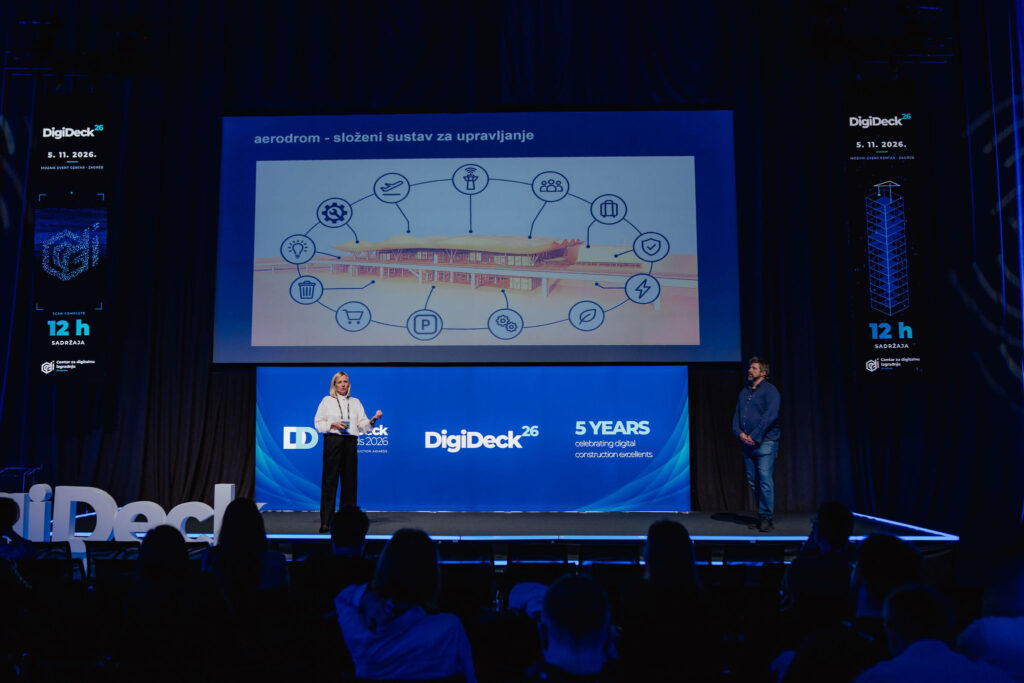
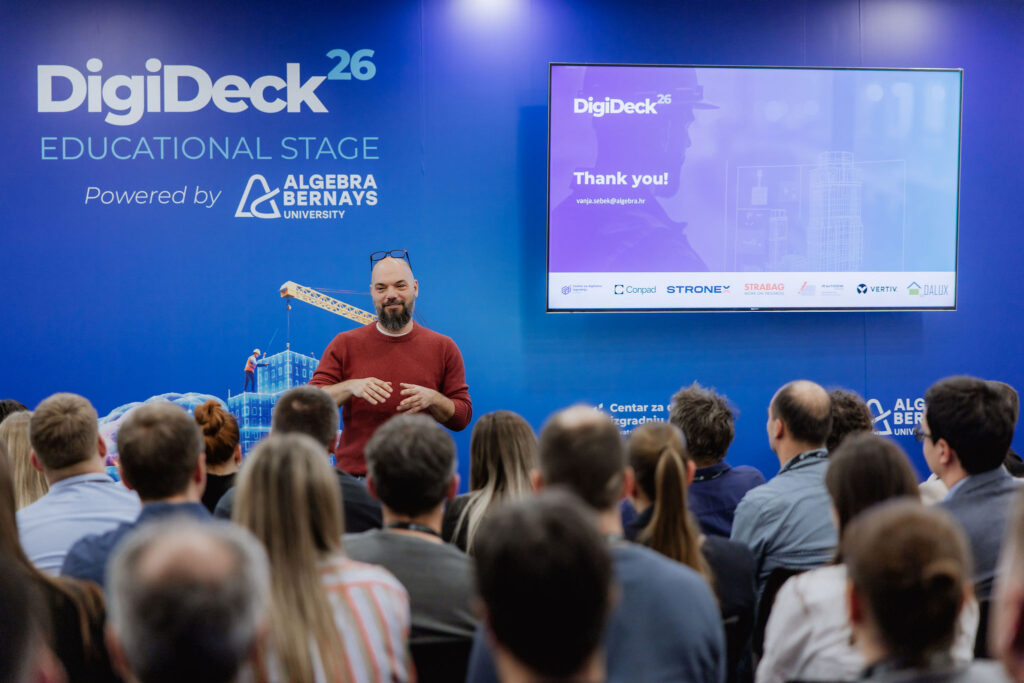
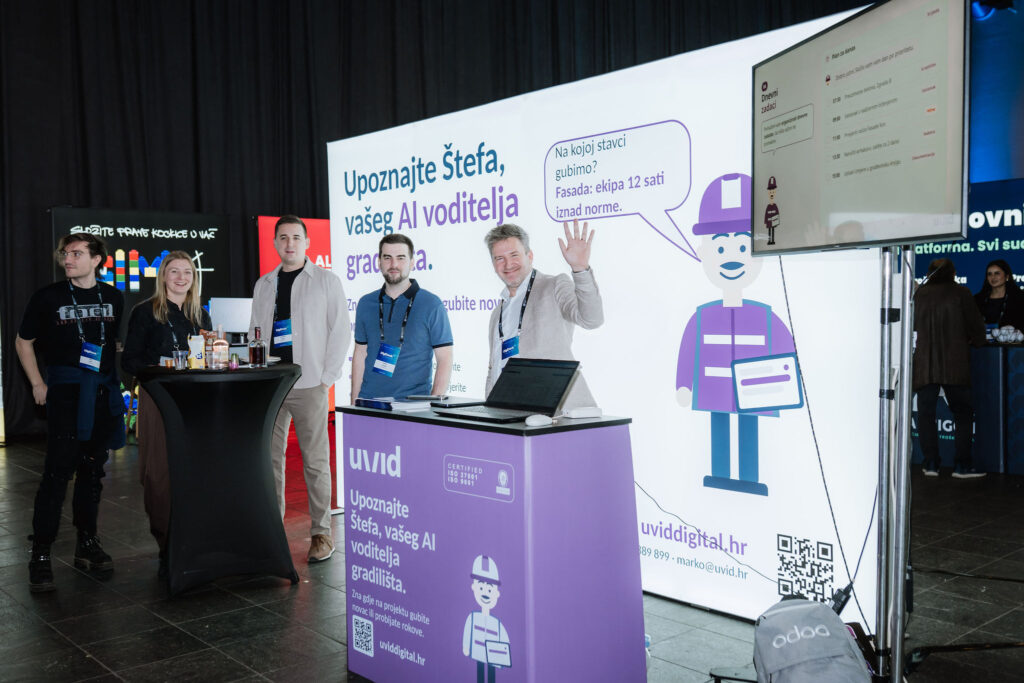
Artificial intelligence was one of the day’s main themes, with seven talks dedicated to it. Speakers presented practical applications ranging from tools for designing digital infrastructure and automating cost estimates to an AI site manager. Josip Komadina from Digital Construction Technologies Group drew particular attention with his talk on bringing an AI agent into a development team. Alongside the Main Stage, the Educational Stage, delivered in partnership with Algebra Bernays University, focused on practical applications. Of the three workshops, Vanja Šebek’s “What Can AI Do for You? And How?” drew the most interest, giving participants the chance to try AI tools for themselves.
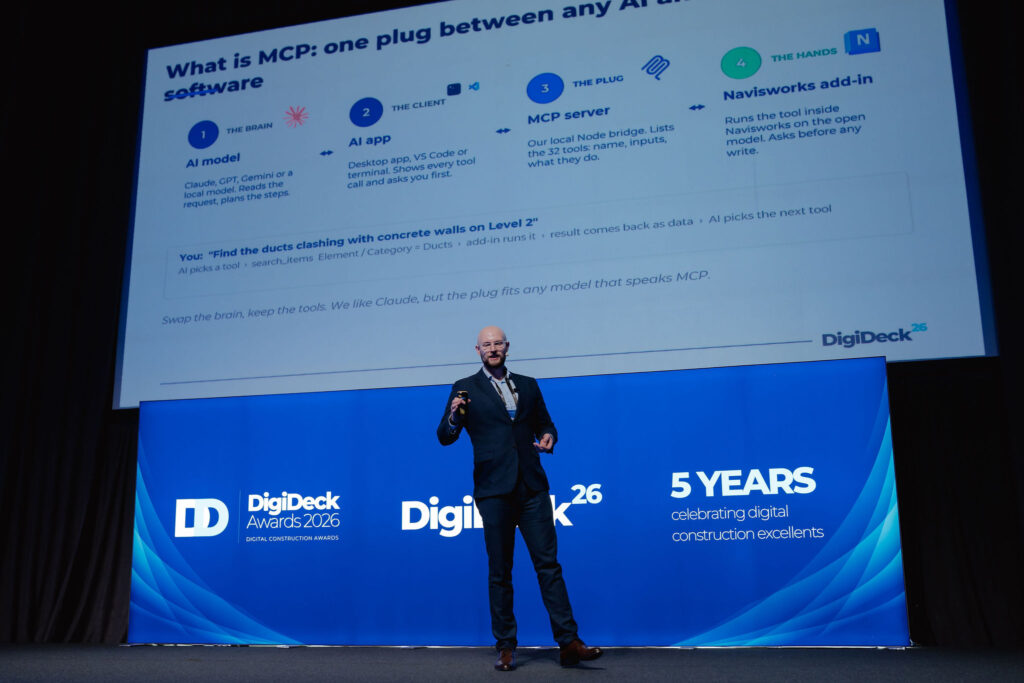
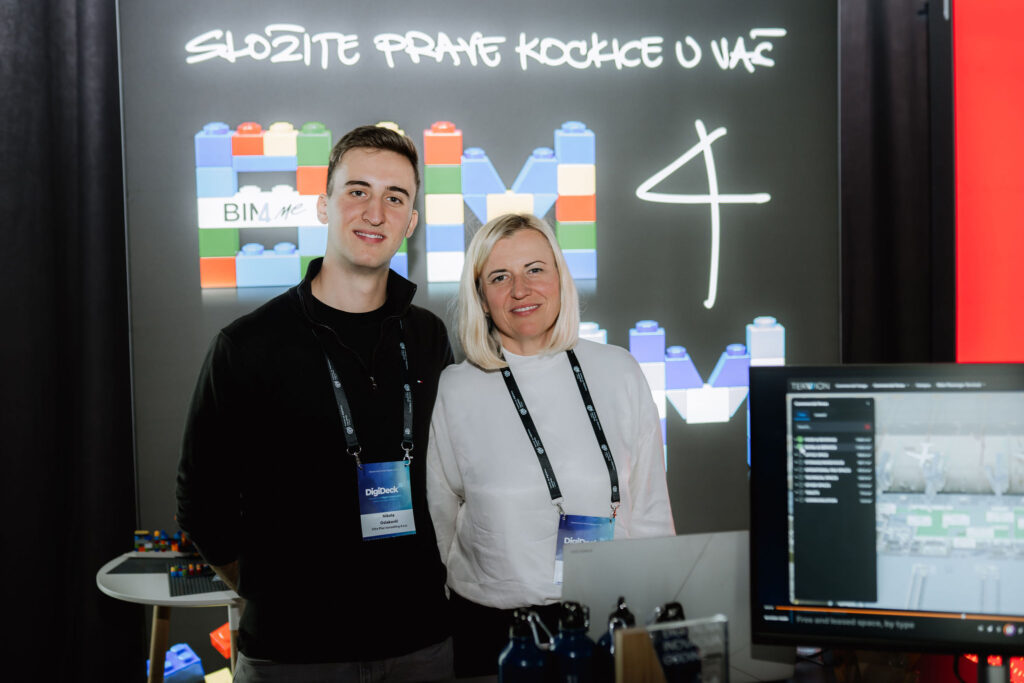
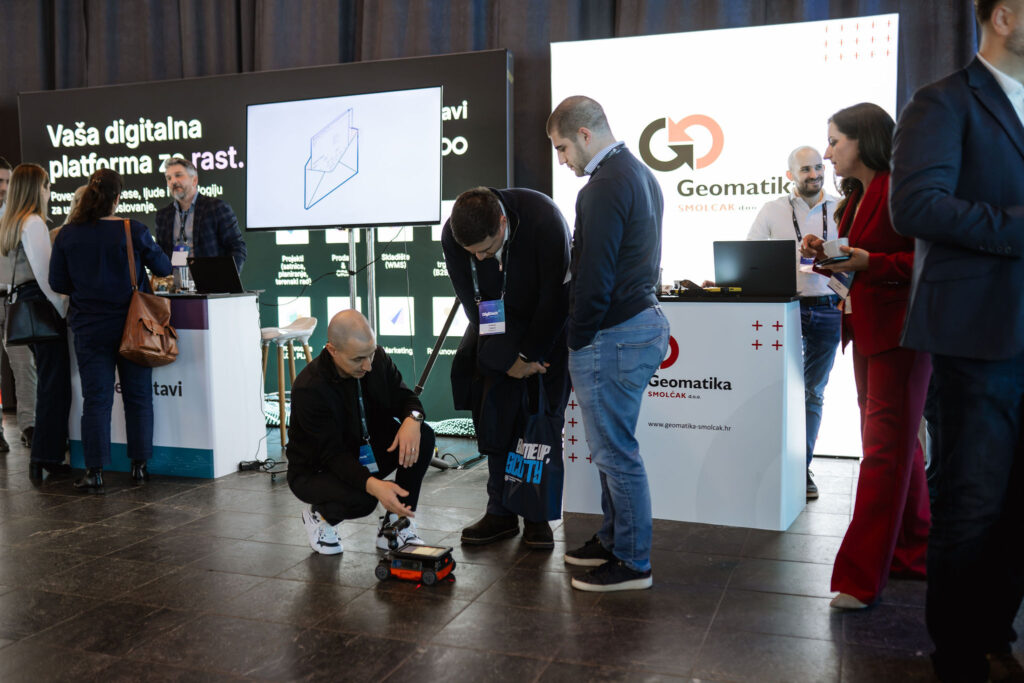
The exhibition featured gold partners DCT, Amelicor, Inovapro and Arhigon, alongside silver partners STRABAG, Vertiv, 3D art, Prior, Conpad, Uvid, Stronex and Dalux. They were joined by Kamgrad, Geo-centar, Salterra, Geomatika-Smolčak, GI, NavaIT, e-sustavi, Mi projektiramo vama, SOFiSTiK, Infra Plan Consulting, BIM4Me, CAD Communiter ad decus, Stas Organizer and Intelika. Between sessions, attendees could watch demonstrations, talk with exhibitors and make new professional connections. With vinyl records playing throughout the day, the Analog Corner offered a change of pace, a brief break from screens and a reminder that technology works best when it leaves room for people.







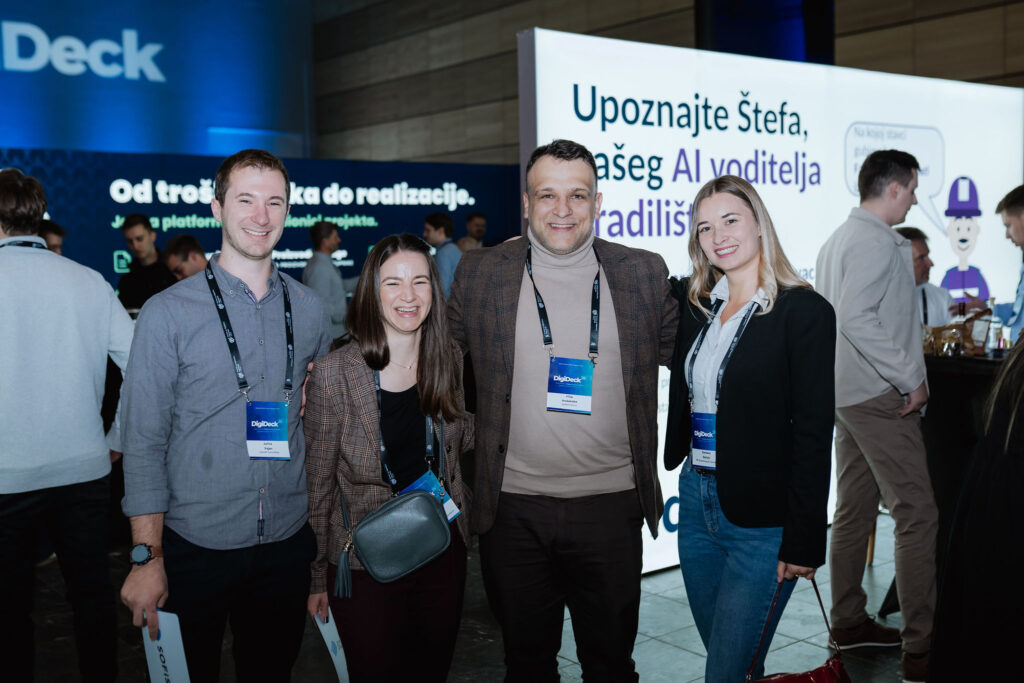




The day ended with the DigiDeck Afterparty. The fifth edition reaffirmed an idea CDIH has championed from the start: the digital future of construction depends on collaboration among industry professionals, academia, businesses and institutions. Thank you to all our speakers, panellists, partners, exhibitors, patrons and attendees.
See you at DigiDeck 2027.


